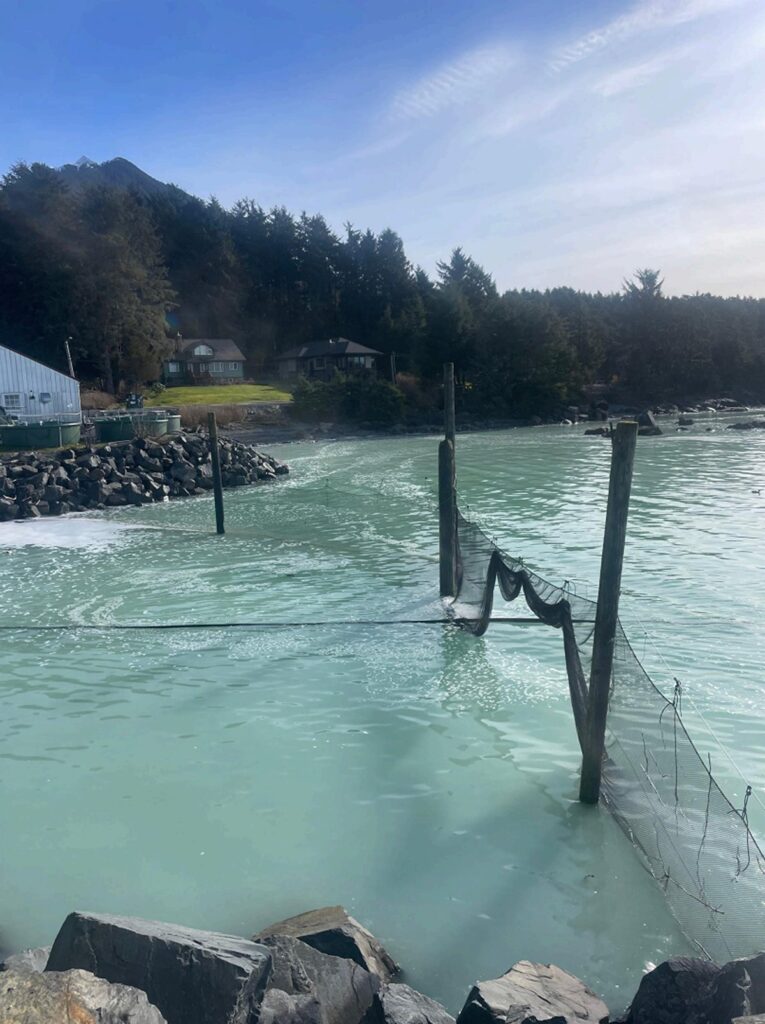
Herring season has long been a blessing on this island in Lingít Aaní, nestled off the glacial coasts of Southeast Alaska. Herring season, marked by the return of massive schools of the lithe, silvery fish to the waters of the Sitka Sound, also comes with ‘herring weather’: days of rapidly alternating rain, sun, snow, and hail that foretell the imminent arrival of thousands of tons of fish. Then comes the changing color of the ocean, from a dark and stormy blue to a light, nearly tropical color, confirming that the herring have arrived and spawned. Which means it is time to harvest the eggs!
The Role of Herring in Southeast Alaska
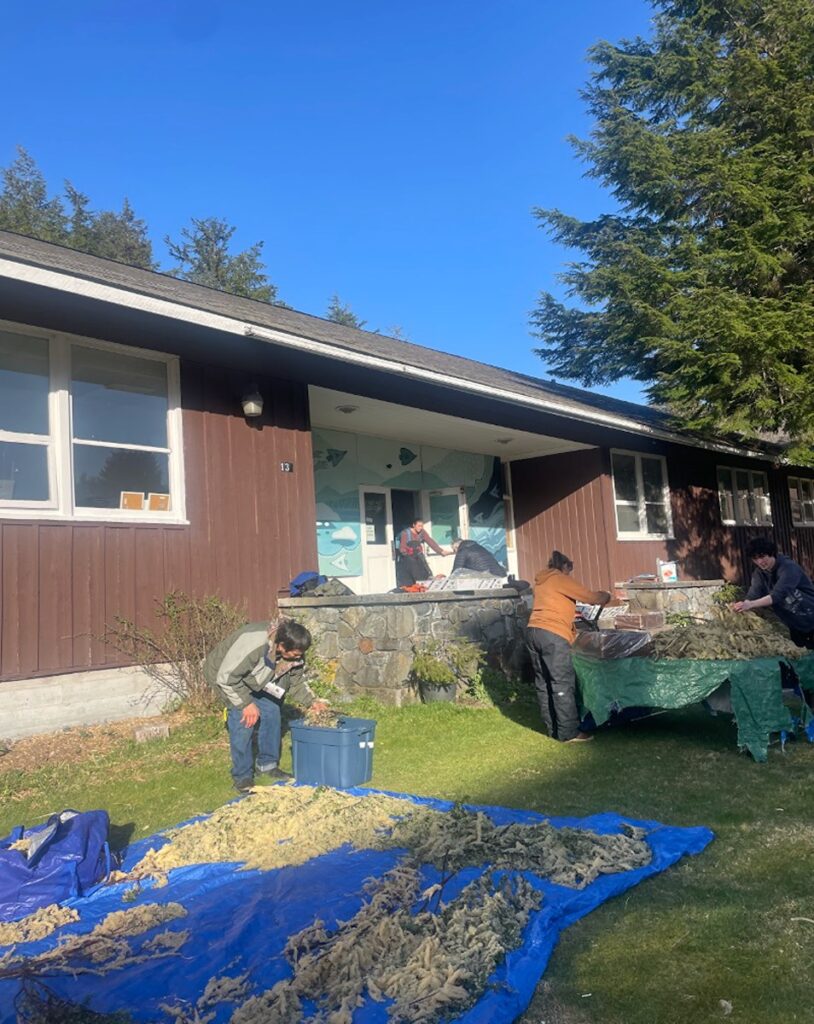
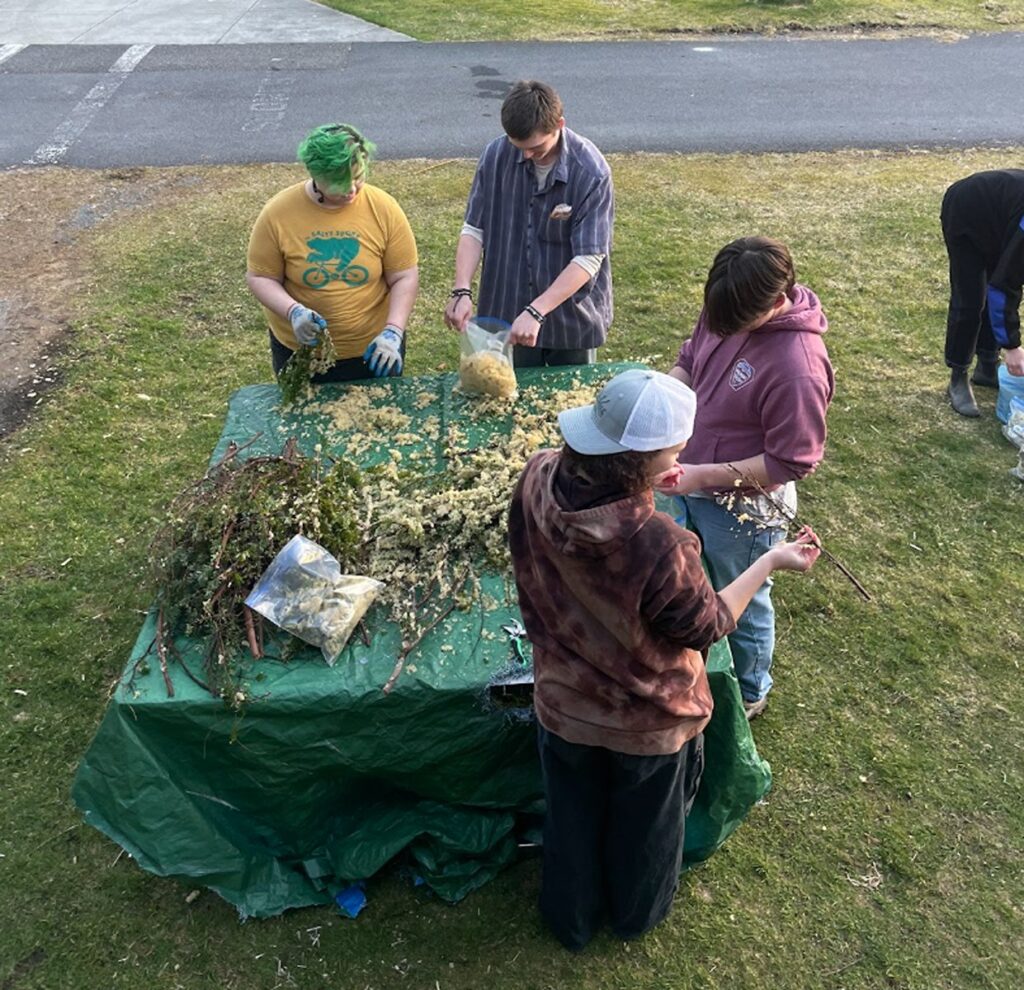
For many, especially the Tlingit people, the first food of spring is herring eggs on branches, or ‘G̱áax’w ka Haaw’. For thousands of years, Tlingit people have been harvesting herring eggs by laying hemlock boughs into the water. The herring deem the hemlock a stable place to lay their eggs, and within days the harvesters gather the branches laden with thousands of pounds of herring eggs. These newly heavy branches are then loaded onto docks, front yards, and kitchen sinks all across town for families, friends, and community members to process into states manageable for cooking, eating, sharing, and gifting.
Herring Protectors
In 2016, K’asheechtlaa Louise Brady founded the Herring Protectors, a grassroots organization led by Kiks.ádi women protecting the history and future of the herring. Their film, Yaá at Wooné: Respect for All Things, shares the importance of the herring to the Tlingit way of life and addresses Indigenous sovereignty and ecological knowledge.
Outer Coast was honored to have the opportunity to volunteer with the Herring Protectors this year. Herring Protectors volunteer Devon Calvin worked with Outer Coast Service Lead Lucas Opgenorth to set up trainings and schedules for Outer Coast students (sgóonwan) to learn how to process the eggs. The goal was for students (plus a few eager staffulty!) to take on the bulk of processing labor so that traditional harvesters and Herring Protector members could focus on setting the branches and harvesting eggs from the water. Once processed, the eggs are shared with the community through many channels — as gifts for elders, served as food at events, and distributed during the Yaaw Ḵoo.éex’ on May 10th.
Training the “Quay Leads”
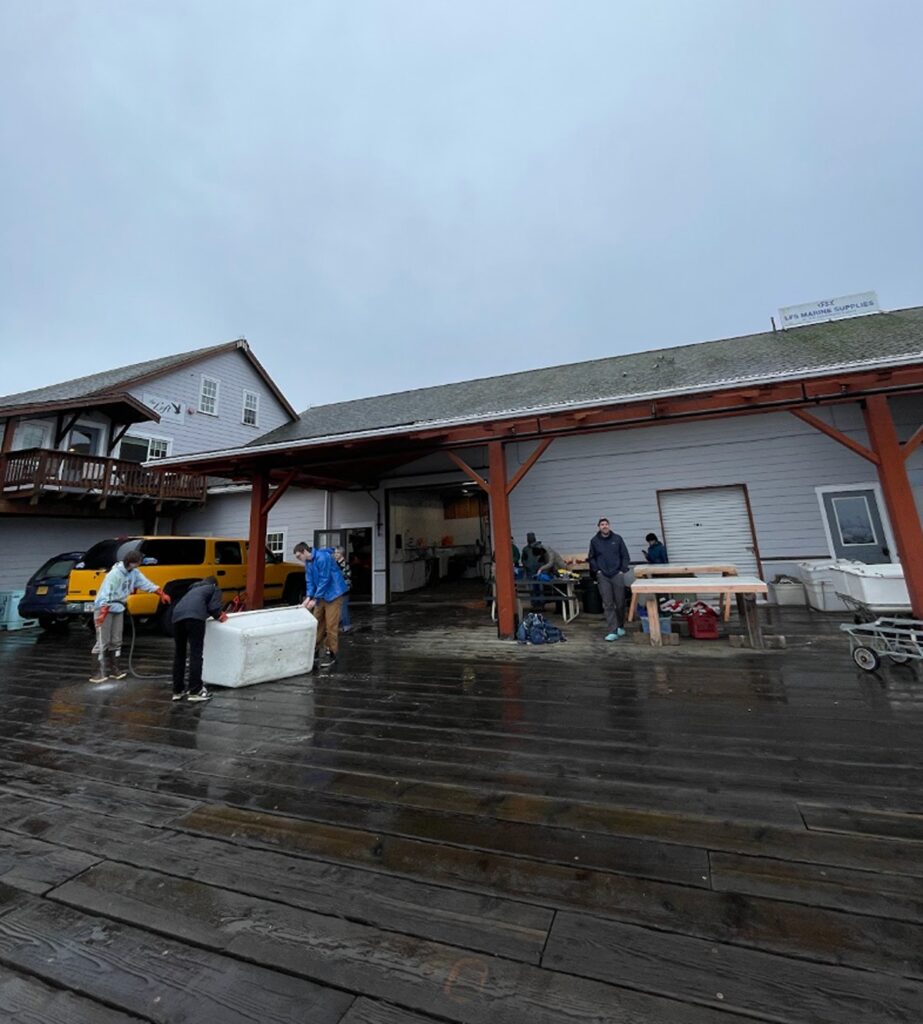
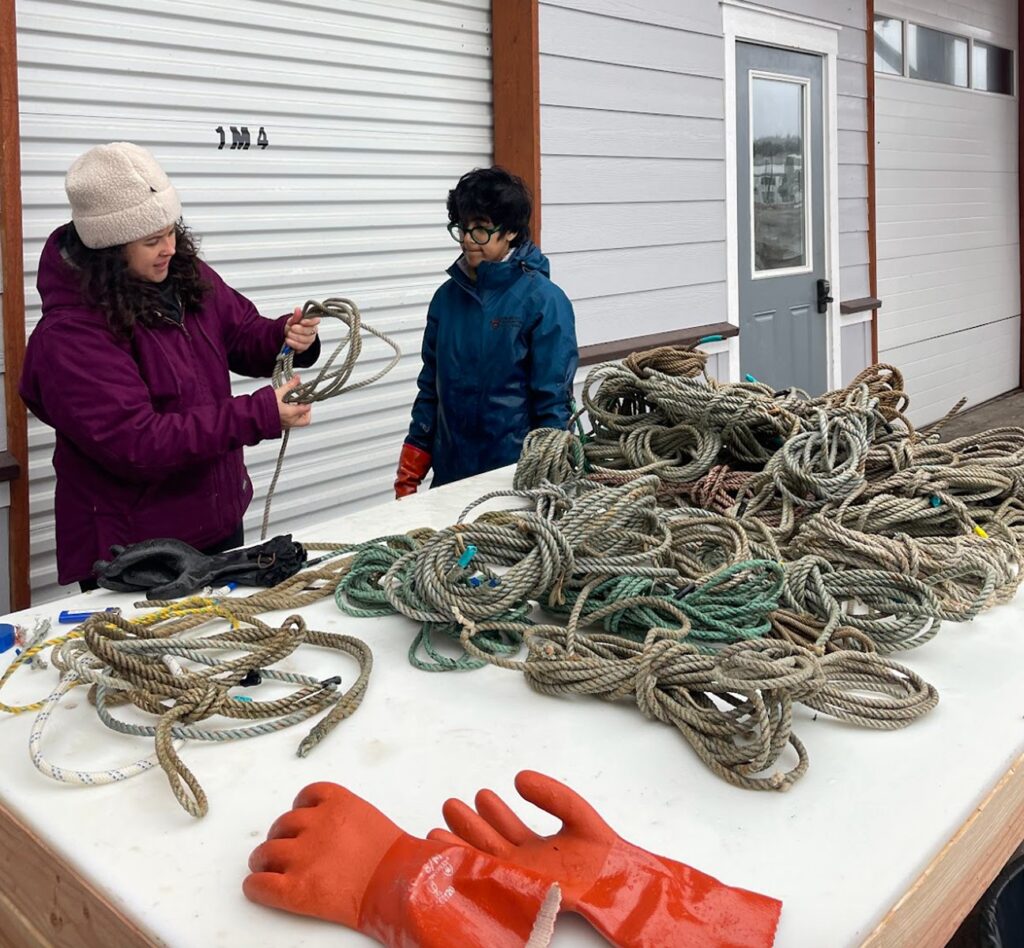
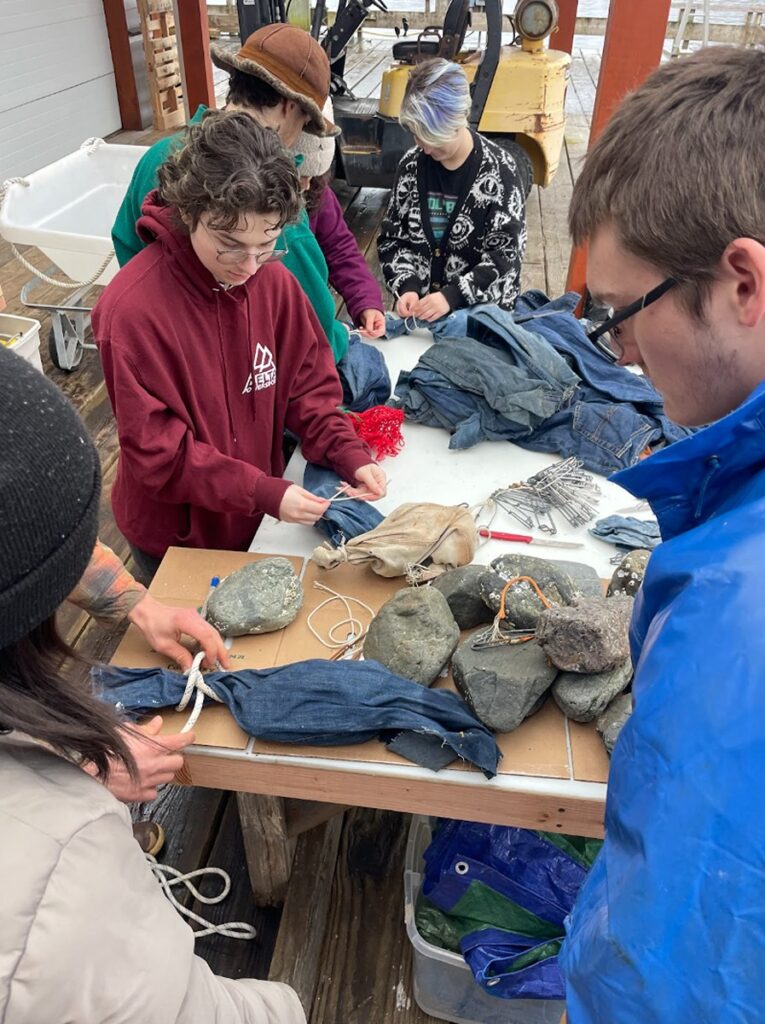
On a rainy weekday morning before the harvest began, 13 students and staffulty made their way down to the Fisherman’s Quay on Katlian Street, a dock owned by Devon’s family for generations. Once there, Devon walked everyone through the whole process. Since there were not yet any eggs, students cleaned rope and learned how to make anchors for dropping hemlock branches into the water. Everyone reconvened a few days later for another hands-on training after the first batch of eggs made it to shore! The Outer Coast volunteers that Devon trained were deemed “quay leads”.
From Branch to Freezer Bag: Through the Process
How does one “process” a hemlock branch chock full of herring eggs at the Quay?
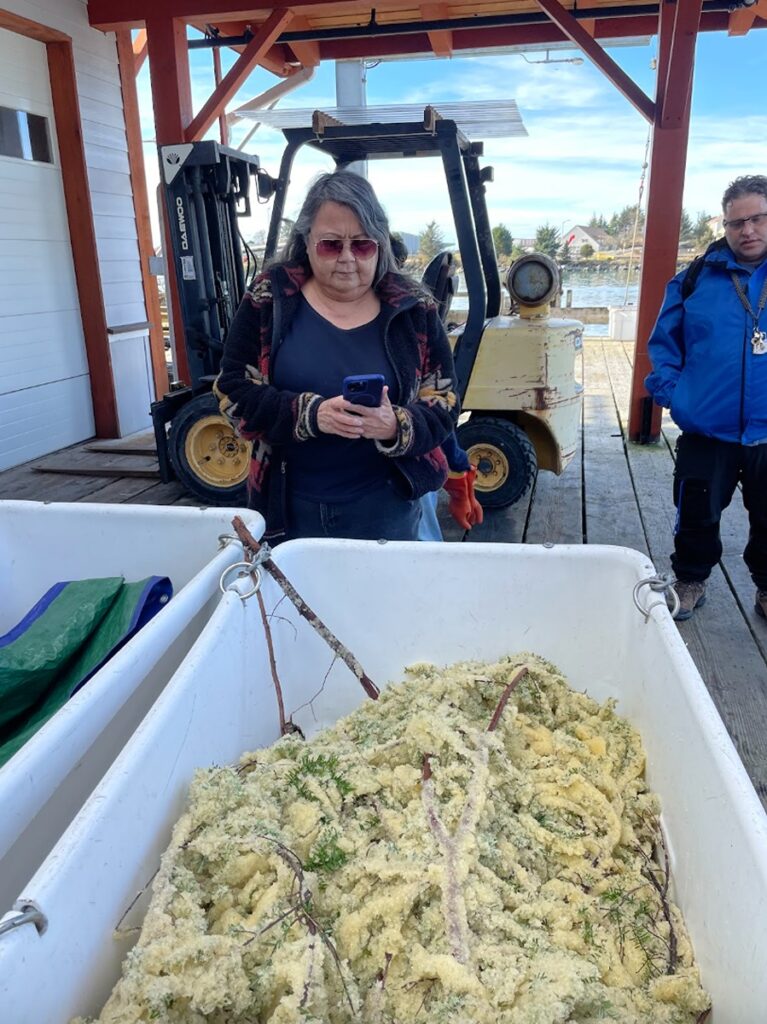
First, a few days after the hemlock bough is placed in the water, the now egg-covered branches are hauled onto a boat. The boat arrives at the Quay, and the eggs are transferred up onto the main dock, either through a small hand controlled hoist or by a team pushing the tote up the ramp.
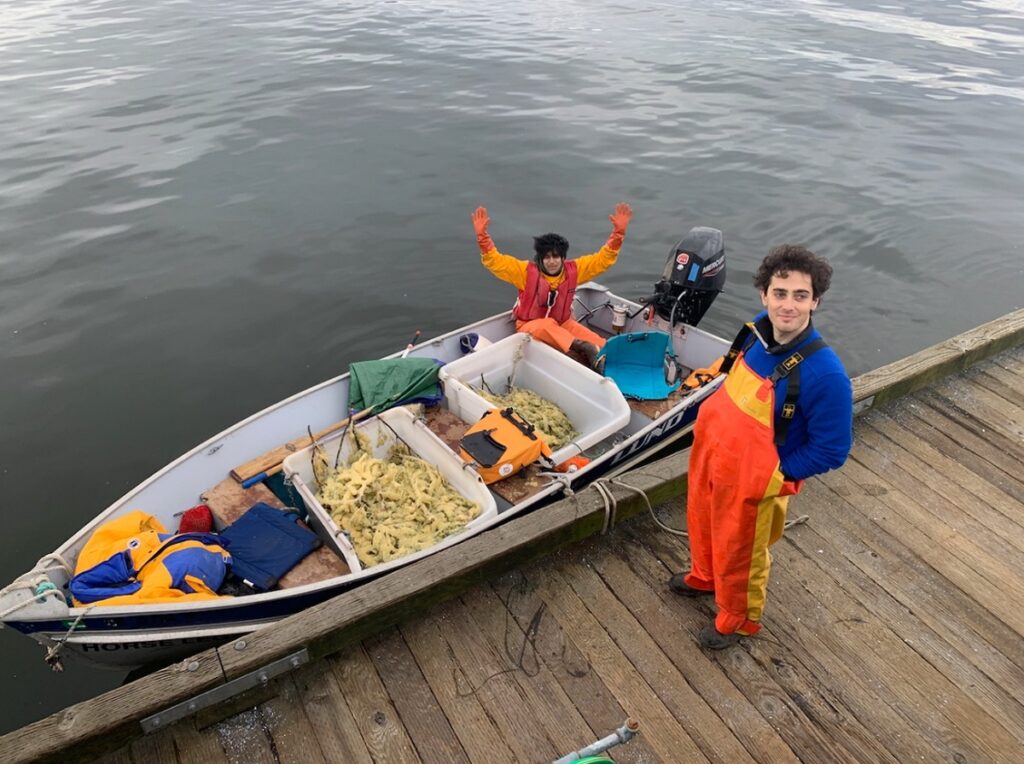
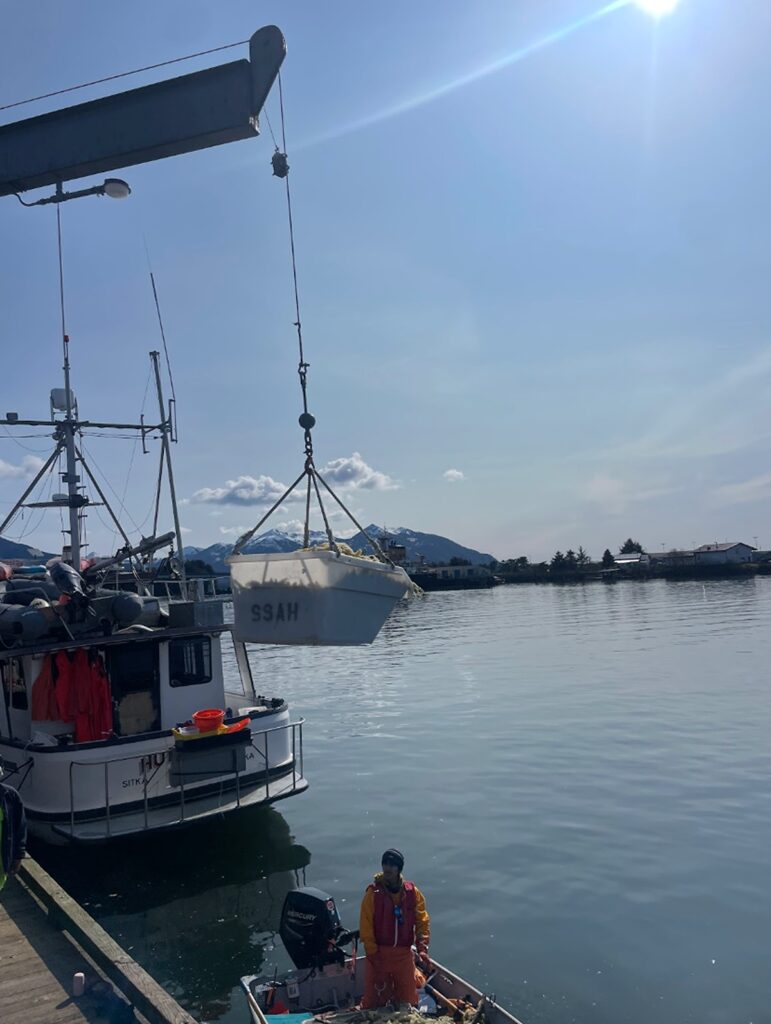
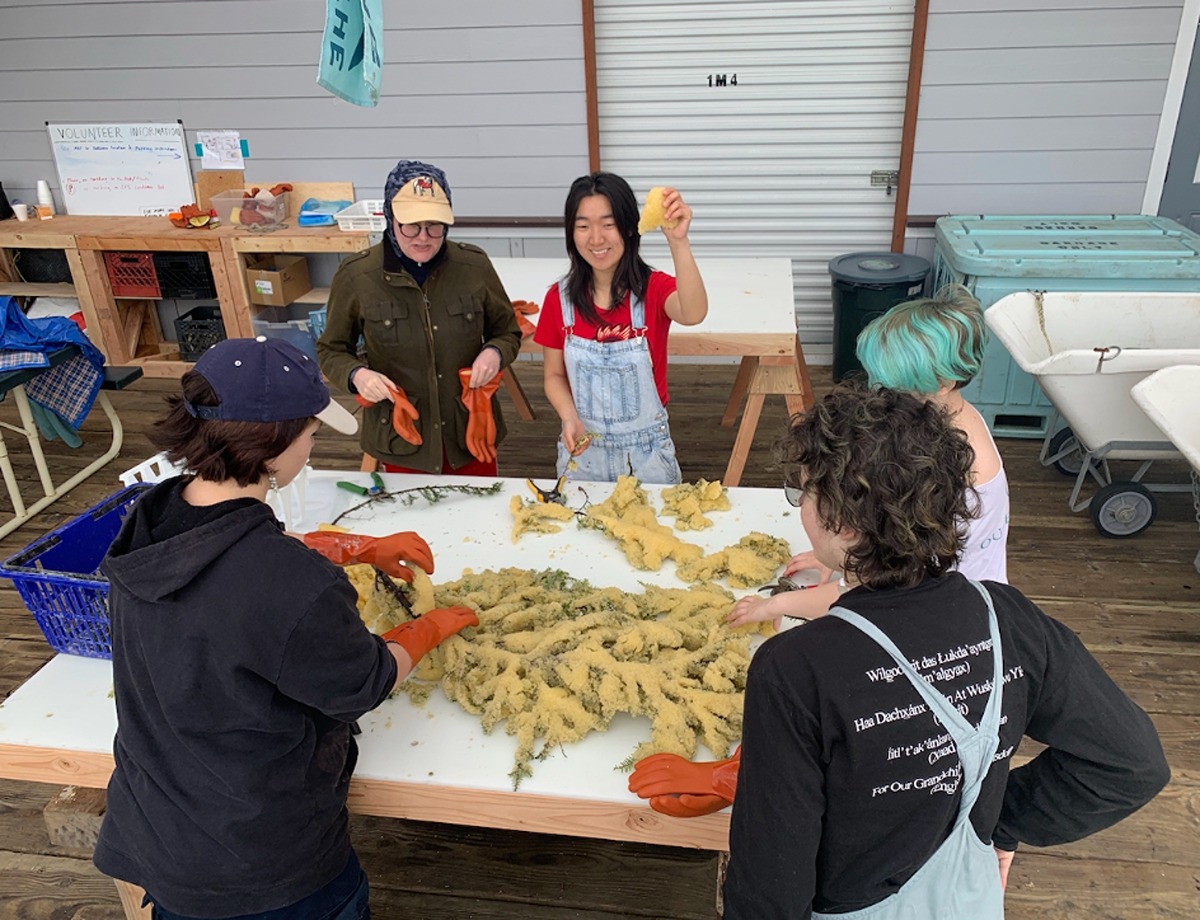
The totes of eggs, about 250 pounds each, are placed near the covered processing tables—well-protected from the rain. Quay leads and community volunteers gently lift the top branches from the bins onto the tables to begin the process of breaking the branches into usable sizes.
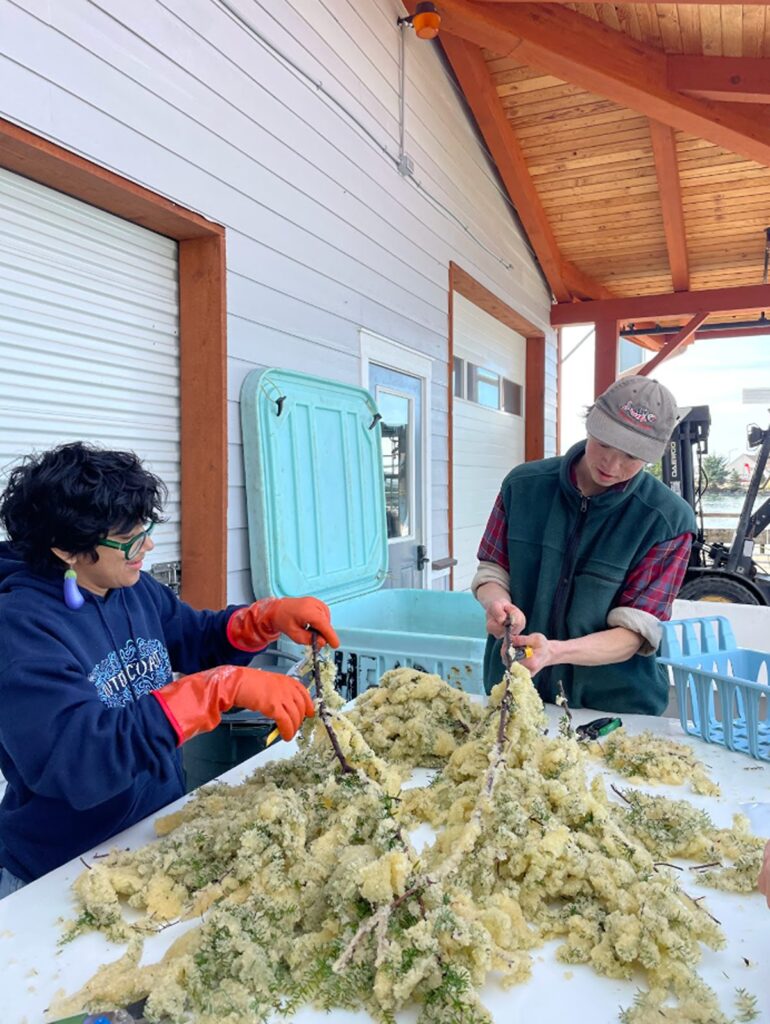
The goal is to cut the branches into small chunks that are easy to blanche, dip in soy sauce, or otherwise cook. It takes some practice to discern what the ideal ratio of egg to branch is (but, mostly: the more egg the better!).
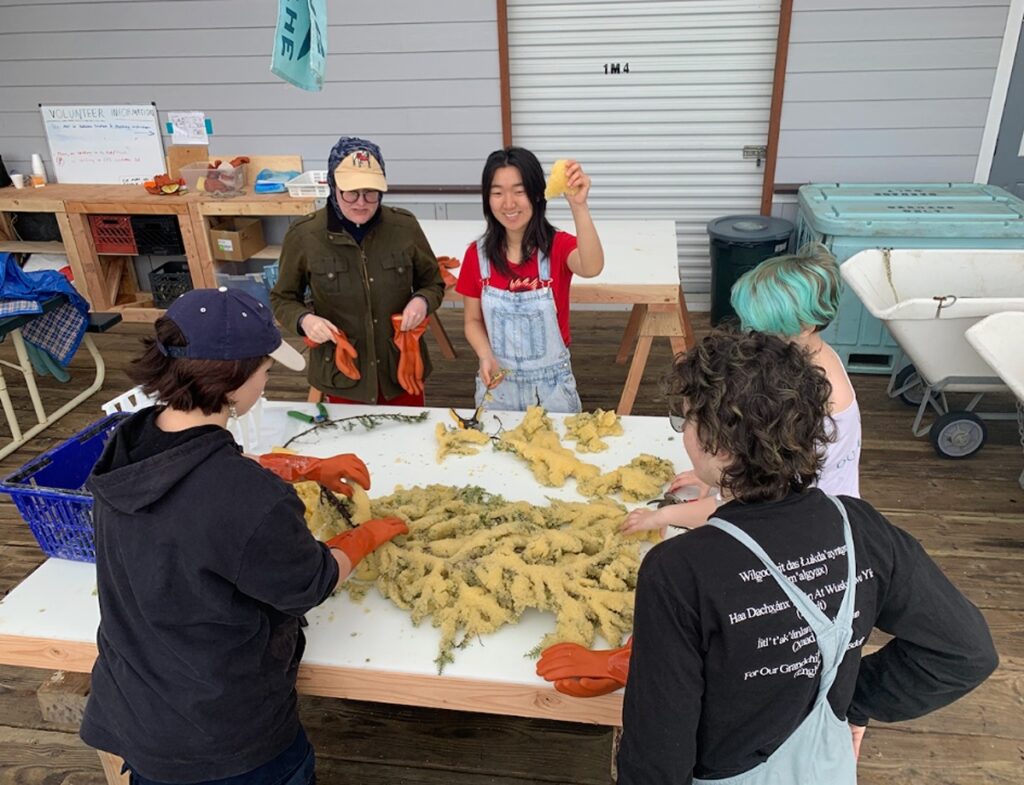
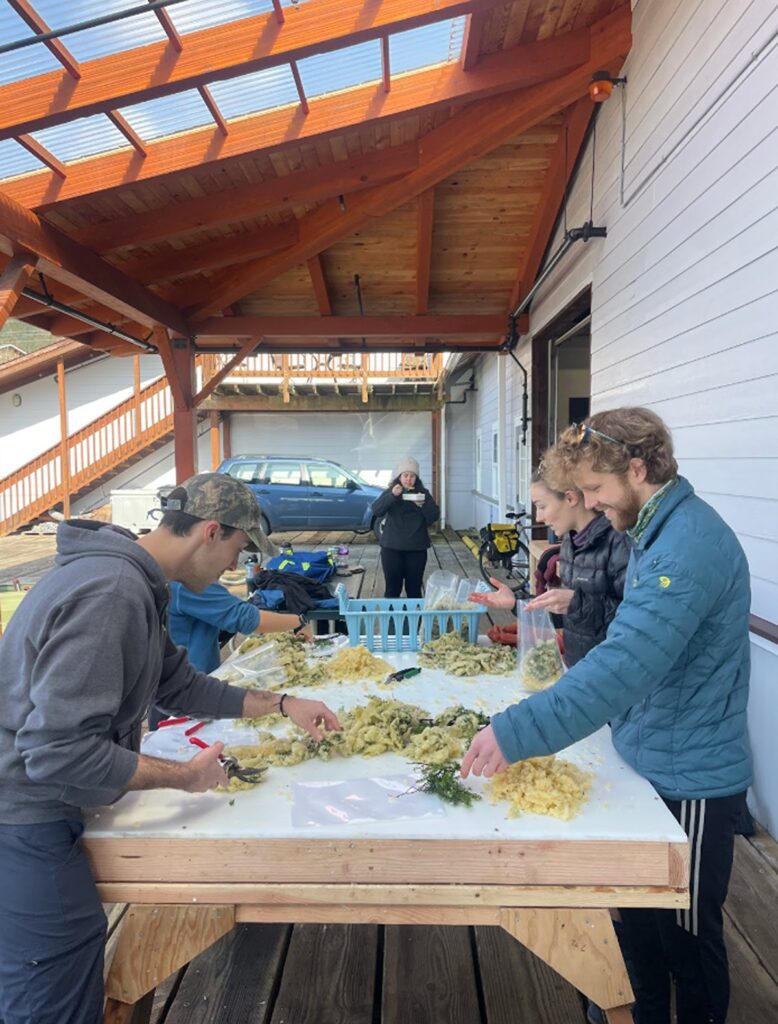
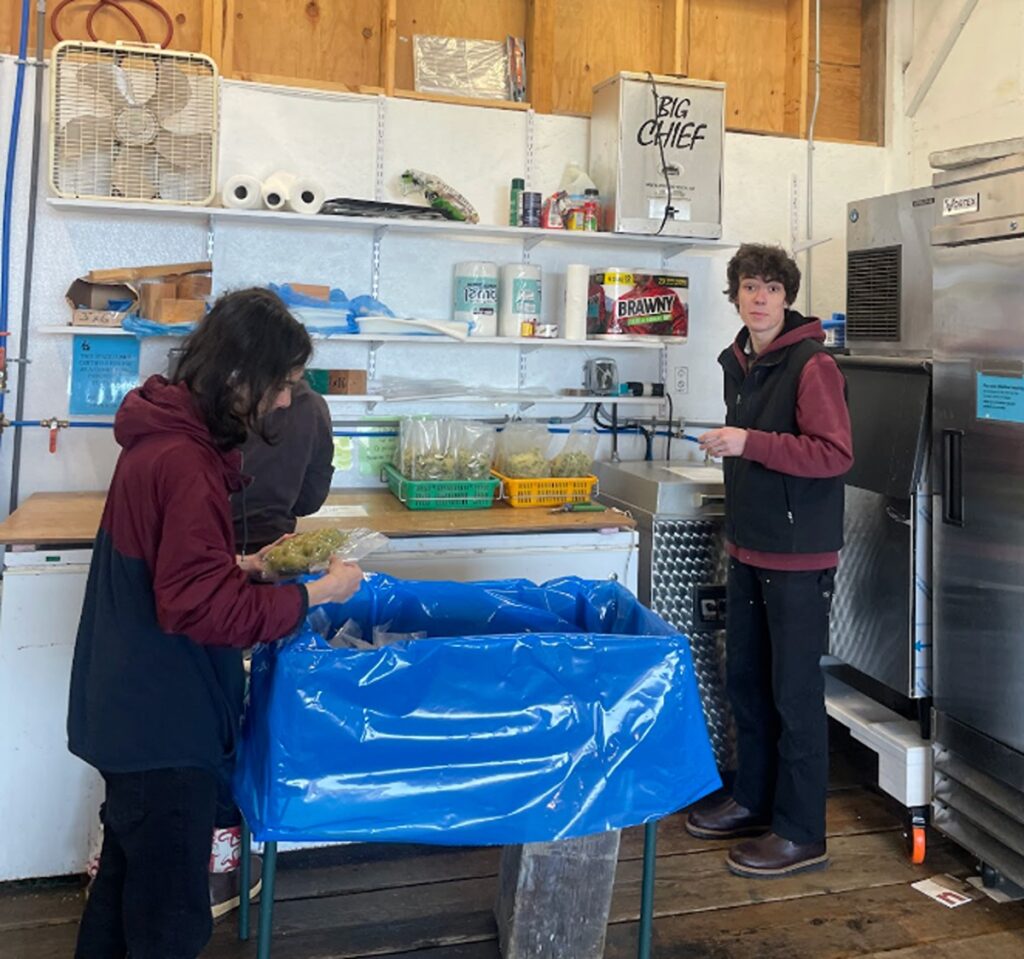
After being cut to the right size with gardening clippers, the small branches are placed into vacuum bags and sent to the vacuum sealer. Another set of volunteers are ready at the machine, drying off the bags and sealing them up. After double checking the seals for posterity and longevity, the bags are packed into fish boxes and the fish boxes are packed into the freezer.
Wrapping Up
After roughly a week of quay leads heading down to the dock at a moment’s notice, the final bags of herring eggs were vacuum sealed and packed into freezers. On our biggest day of work, over 18 volunteers showed up—with friends from dance class and work, as well as various housemates spending their afternoons supporting this incredible endeavor.
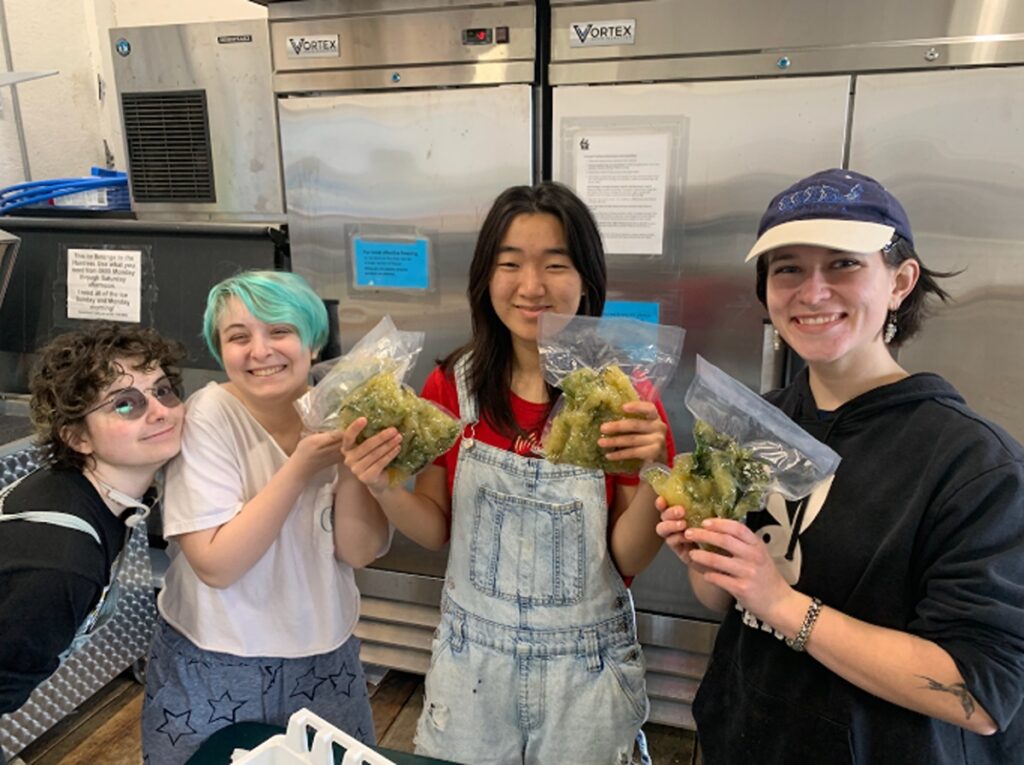
There was music, laughing, and pizza for the crew. Plus, endless snacks: the eggs are ready for eating as soon as they are out of the water!
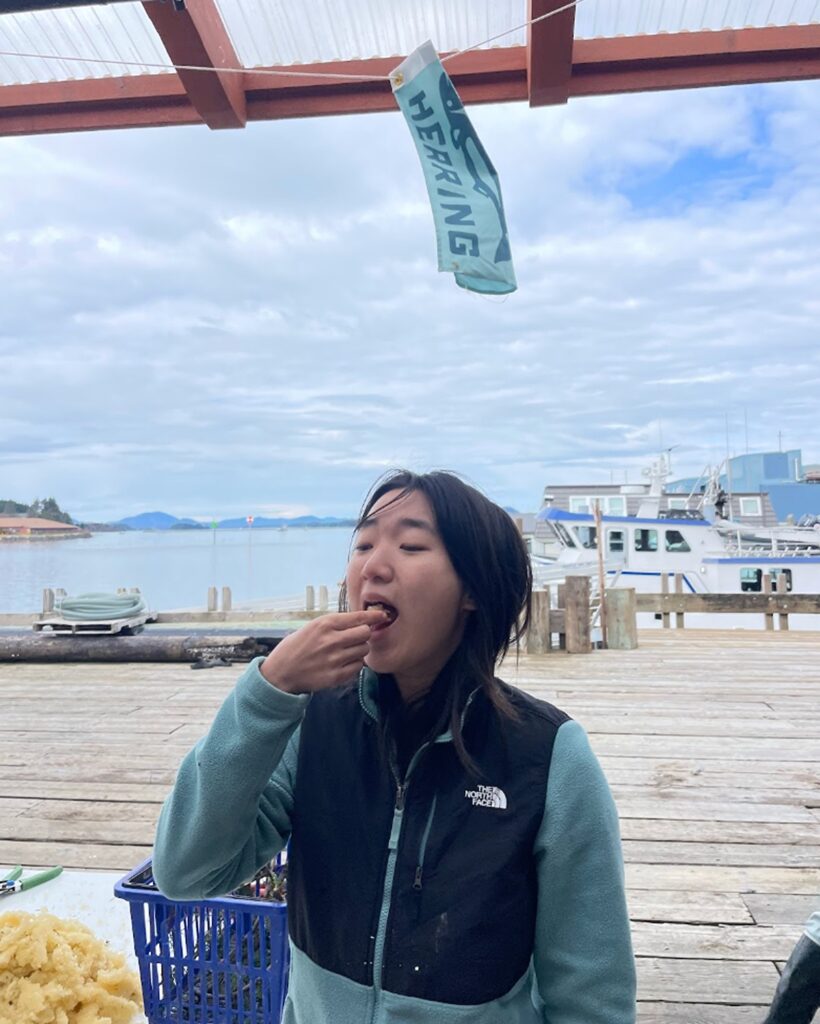
According to Devon, nearly 2,000 pounds of eggs were processed in that week! Outer Coast is grateful to have been invited to support such vital community work, and for the opportunity to learn from such knowledgeable community leaders. Gunalchéesh to the people and the yaaw (herring) for a meaningful herring season.