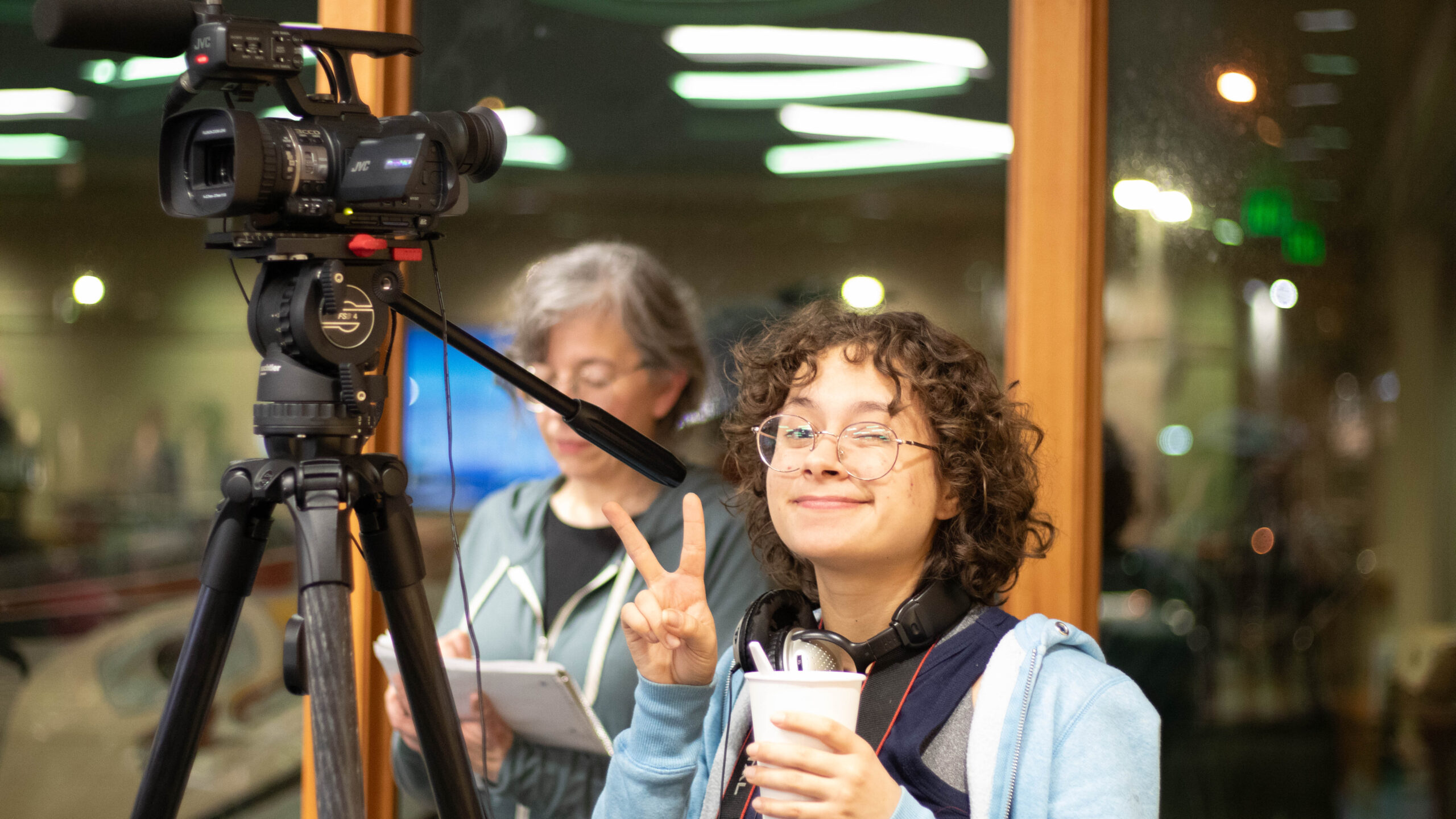
Between 15-20 students per cohort enroll in the undergraduate program, for a total student body of up to 40.
Outer Coast serves a diverse student body from across the United States. We emphasize reaching students from Alaska, particularly Alaska Natives and rural Alaskans, as well as other high-potential students from backgrounds underserved in American higher education.
Although Outer Coast is not yet an independently accredited college, the undergraduate program serves as a student’s first two years of college-level education. Outer Coast is authorized as a postsecondary institution by the Alaska Commission on Postsecondary Education (ACPE) and confers credit through our collaboration with University of Alaska Southeast.
Outer Coast undergraduates receive two full years of college credit and a transcript from University of Alaska Southeast and are positioned to transfer with junior standing to a four-year university to finish their undergraduate degree.
Outer Coast prepares students for all kinds of pathways, but the majority of our undergraduate alumni go on to four-year colleges to complete bachelor’s degrees. Members of our inaugural undergraduate class are matriculating at institutions including Alaska Pacific University, Bard College, Bard College Berlin, Carleton College, College of the Atlantic, University of Alaska Southeast, University of the South (Sewanee), Washington University in St. Louis, and Whitman College. Other students work, learn trades, or live with their families and engage in issues within their home communities after Outer Coast.
No, there are no majors at Outer Coast. That said, students with particular academic or professional interests can build knowledge in specific subject areas through elective coursework and/or through service or research opportunities.
In the first year, the curriculum consists mostly of required courses, though students may take elective courses as their schedule allows. In the second year, students take a mix of required courses and electives, and have the option to complete a semester-long independent Unthesis research project, which is advised and evaluated by core faculty, student peers, and community members.
The academic curriculum at Outer Coast blends Indigenous and Western knowledge systems. Required courses and electives span many disciplines, such as Indigenous studies, Tlingit language and oral literature, writing, studio art, ecology and biology, philosophy, archaeology, engineering, and math. Required courses often include the full cohort of 20 students, while electives typically enroll between five and 12 students among first- and second-years. For detailed information about Outer Coastʼs curriculum, including descriptions of current and previously offered courses, please see our Academics page.
Due to the small size of the Outer Coast community, our staff and faculty support students with a variety of learning styles and differences, and we strive to provide the resources each student needs in order to be successful. We also have a dedicated team of student support staff (an Academic Support Coordinator, Student Life Coordinator, and Social-Emotional Support Lead) who are available to support students’ individual needs on a regular basis.
That said, Outer Coast does not have a professional specialist for students with disabilities or learning disorders, and the intensive cohort-based model may not be a fit for all students.
Because a significant part of what makes Outer Coast a unique institution is its cohort-based model and emphasis on service and self-governance alongside academics, we do not permit students to accelerate their graduation by applying prior credits to Outer Coast.
Commercial flights arrive at the Rocky Gutierrez Airport in Sitka, just a mile away from campus.
Sitka is connected by direct flight to major cities and towns in Alaska, as well as to Seattle and other transit hubs in the lower 48.
Students live in shared dormitory-style rooms in Sweetland Hall on the Sitka Fine Arts campus and have access to a variety of shared common spaces. Regular meal service is provided by the Sweetland dining hall staff, and students are able to prepare supplemental food in a dedicated kitchen space with a grocery budget provided by Outer Coast. For gym access, students may purchase passes to the nearby Hames Center, and subsidized passes are provided for students who require financial assistance. Read more about campus here.
Outer Coast’s cohort model necessitates that students live together as a community in the dorms. Students are not permitted to live off campus.
Sitka is a Southeast Alaskan town of roughly 8,500 residents on Baranof Island, the traditional lands of the Tlingit people. For some students, Sitka may be larger than the place they call home; for others, it might be the smallest community they have been a part of. Nestled between the mountains and the sea, it is known for its extraordinary natural beauty, rich cultural heritage, and extensive outdoor opportunities, which include a network of maintained trails and opportunities to kayak and boat. Many residents of Sitka have lived here for multiple generations; others come for seasonal employment opportunities like commercial fishing. Local news is covered by the Sitka Sentinel and KCAW Raven Radio. Popular hangout spots include local pizza parlor Mean Queen, Sitka Pel’meni, Backdoor Cafe, and Wildflour Cafe.
Southeast Alaska is known for its year-round wet weather. The summers are cool and mostly cloudy with consistent rain and typical temperatures ranging from 50˚F to 60˚F. The winters are dark with temperatures that hover around freezing, but typically don’t dip below 25˚F. Over the course of the year the temperature typically varies from 33°F to 62°F. Incoming students will receive a comprehensive packing list in order to prepare for their arrival.
Sitka is a walkable and pedestrian-friendly community. Many students also opt to bike around town: The Salty Spoke Bike Co-op sells used bicycles at affordable rates. For group excursions and trips to the grocery store, we have a dedicated program vehicle. We do not encourage students to bring personal motor vehicles to campus.
Sitka is a haven of hiking, sea kayaking, trail running, biking, and many other outdoor pastimes. Additional opportunities to learn about and go berry picking, foraging, birdwatching and beachcombing abound. Students may borrow equipment and navigation tools from Outer Coastʼs gear room, and are encouraged to connect with the land through outdoor recreation during their time in Sitka. Students attend a mandatory outdoor safety orientation series soon after arriving to campus.
Formal clubs or organizations that you might find at typical colleges or universities don’t exist in the same way at Outer Coast. Students are given the space and opportunity through formal channels to make committees for specific ends, and have significant latitude to devise other projects and convenings of their choosing, both within the Outer Coast community or with collaborators elsewhere.
Many undergraduates maintain part-time jobs while at Outer Coast—for example, as baristas and bakers at the Backdoor Cafe, servers at Beak Restaurant, staff writers for the Sitka Sentinel, and other jobs around town. However, Outer Coast expects students to be fully engaged across the three pillars in the intensive cohort model, and a job may make it challenging to maintain one’s commitments to the learning and living community at Outer Coast.
High school graduates and/or GED holders are eligible to apply for the Undergraduate Program. Rising high school juniors and seniors are eligible to apply for the Summer Seminar, as well as graduating seniors from Alaska.
We look for applicants who want more from their education and are genuinely, insatiably curious to learn about themselves and others. We seek students who can rise to the occasion to create a meaningful academic and social community, and who are empathetic, resilient, and inclusive of their peers.
In our recruitment efforts, we focus on reaching Alaska Native students, rural Alaskans, and other students from backgrounds historically underrepresented in higher education. Outer Coast does not discriminate on the basis of race, color, nationality, ethnicity, creed, religion, gender, gender identity, gender expression, or sexual orientation.
No. Performance on standardized tests and prior history of sustained academic excellence are not prerequisites for success at Outer Coast. Above all, Outer Coast seeks curious students eager to invest time and effort into their education and community.
We are committed to making Outer Coast affordable and will cover full demonstrated financial need for all admitted students. The full cost of attendance is $46,500 per year, which includes tuition, room and board, books, and fees. Most students will not pay the full amount, and cost is never a barrier to an admitted student’s attendance at Outer Coast.
Admitted students should complete the FAFSA. We take a flexible and human-centered approach to financial aid, which entails a personal conversation between Outer Coast and each admitted student/family to determine a personalized cost of attendance that takes their precise financial situation into account; the FAFSA is the starting point for this conversation.
As of the 2026-2027 year, we are not able to sponsor visas or enroll international students in Outer Coastʼs undergraduate program, but we are working towards being able to do so soon. If you’re interested in learning more about our progress, please be in touch at info@outercoast.org.
Yes. However, since students complete two years of undergraduate coursework at Outer Coast, an applicant should not have already obtained their bachelor’s degree.